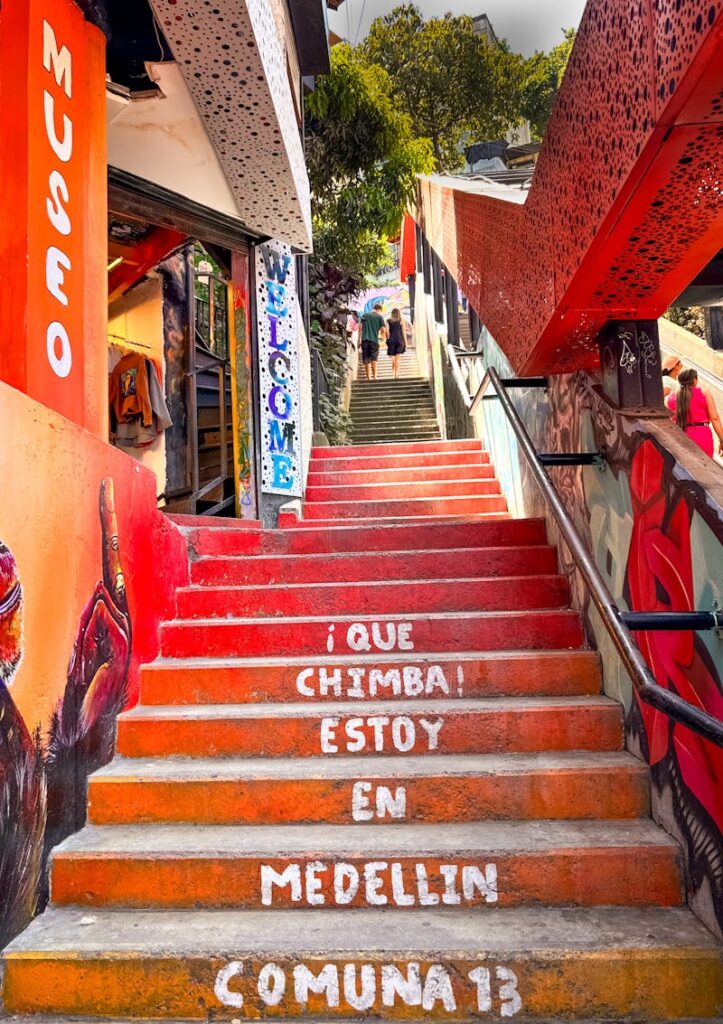
Every travel blog calls Comuna 13 “inspiring,” “colorful,” and “a symbol of transformation.” Here’s what they won’t tell you: by 11am on Tuesdays and Saturdays, 300+ tourists crowd the first escalator plaza fighting for the same Instagram shot. Free tour guides rush through in 90 minutes to maximize daily volume and tip pressure. The neighborhood you’ll photograph barely resembles the community-driven art project from 2013.
Comuna 13 is safe to visit during the day — one of Medellín’s top attractions. Take the free escalators, see street art, go on a guided tour ($15-25 USD). Do NOT stay overnight or visit after dark. Best visited 10am-4pm. Book a guided tour for context; solo visits are fine but you’ll miss the stories.
But here’s the thing—Comuna 13 still matters. After visiting 8 times between 2019-2025 (weekdays, weekends, different tour types, solo wandering I don’t recommend), I’ve learned when the experience feels meaningful vs manufactured, which tours actually deliver context vs just photo ops, and how to navigate the neighborhood without getting scammed or contributing to overtourism’s worst effects.
Comuna 13 transformed from Colombia’s most dangerous neighborhood (300+ deaths during 2002’s Operation Orion military assault) to Medellín’s #1 tourist attraction generating legal income for ex-gang members. The transformation is genuine—murder rates dropped from 380 per 100,000 in 1991 to approximately 15 in 2024. But 13 years after the first graffiti tours began, you’re witnessing “transformation as product,” not stumbling onto authentic community renewal.
This isn’t the sanitized Comuna 13 story you’ll see on Instagram. This is what actually works in 2026: arrive before 10am on weekdays (not Tuesdays/Saturdays when cruise ships dock in Cartagena), understand the difference between free tours ($5-10 tip expected, aggressive guides) and paid tours ($22-28, guaranteed English), know which viewpoints have crowds vs breathing room, and recognize that tourism revenue helps residents while simultaneously commodifying their trauma.
Planning your Medellín trip? See our complete things to do in Medellín guide for how Comuna 13 fits into a 3-5 day itinerary, or check where to stay in Medellín for neighborhoods with easiest Comuna 13 access.
Quick Facts: Comuna 13
- Tour duration: 2.5-3 hours free tours, 3-4 hours paid tours (includes transport from El Poblado)
- Cost: Free + $5-10 tip (20,000-40,000 COP) | $22-28 organized | $60-100 private
- Best time: Weekday mornings 8-10am (60% fewer crowds than weekends)
- Meeting point: San Javier metro station (Line B), then 5-min uphill walk to escalator plaza
- Safety: Very safe during daylight tours (zero violent incidents against tourists 2020-2024), dangerous after dark
- Avoid: Tuesdays/Saturdays (cruise ship days = 5,000+ visitors), after 4pm (last tours depart before sunset)
What Is Comuna 13?
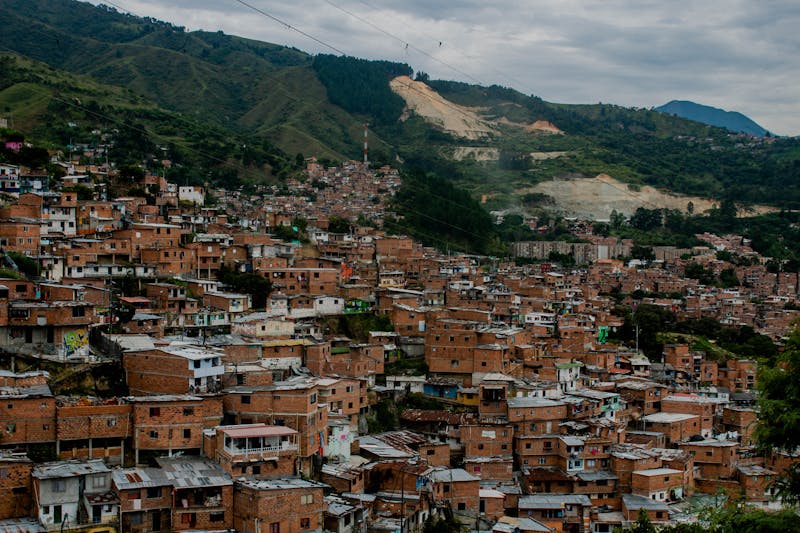
The geography: Hillside neighborhood (comuna) on Medellín’s western edge, officially called “Comuna 13 San Javier.” Population ~130,000 residents spread across steep slopes connecting to the Aburrá Valley below. The outdoor escalators you’ll photograph are called “escaleras eléctricas” and were installed in 2011.
The transformation timeline everyone skips:
| Period | What Actually Happened |
|---|---|
| 1980s-1990s | Controlled by militias and guerrilla groups (FARC, ELN). Murder rate 380 per 100,000. Residents trapped—leave for work = risk death, stay home = no income. |
| 2002 | Operation Orion: Military helicopters strafe hillsides, 300+ killed (including civilians), neighborhood “pacified” through force. Bullet holes still visible under murals. |
| 2003-2010 | Post-conflict limbo. High unemployment, distrust of government, residents begin organizing cultural programs to prevent youth joining gangs. |
| 2011 | Electric escalators installed, connecting hilltop residents to valley metro (30-minute walk → 6-minute escalator ride). Economic access transforms daily life. |
| 2013-2014 | Local artists who lived through violence begin painting murals telling neighborhood story. First informal walking tours organized by residents. |
| 2015-2016 | Word spreads via backpacker networks. Small groups (5-10 people) start appearing. Artists welcome attention, income. |
| 2017-2019 | Tourism explodes post-2016 peace accords. 50+ tours daily. Vendors flood in. Original artists move to less touristy neighborhoods as commercialization intensifies. |
| 2020 | COVID pause. Locals briefly reclaim public spaces. Artists paint pandemic commentary murals. |
| 2021-2026 | Peak touristic-ation. 5,000+ visitors on cruise ship days. Vendors outnumber artists 3:1. New murals commissioned specifically for Instagram appeal (brighter colors, less political content). |
What this means for you visiting in 2026: You’re seeing Comuna 13 at its most commodified, 13 years after transformation began. The neighborhood’s evolution from war zone to tourist attraction is real and documented. But the experience has been polished, packaged, and optimized for tourism revenue. Both can be true.
Reality Check: Every guide says “Comuna 13 represents resilience and hope.” True. But nobody mentions that the same residents who painted murals about trauma now compete with vendors selling $5 bracelets to tourists who spend 90 minutes here then leave. Tourism revenue helps—unemployment dropped, legal income increased. But it also extracted community ownership. You’re witnessing the end result of a process, not the process itself.
Is Comuna 13 Safe in 2026? (Actual Statistics)
Daytime with tours: Very safe. Zero violent incidents against tourists on organized tours 2020-2024 (source: Medellín tourist police data). Pickpocketing rate: 0.5 incidents per 100,000 visitors—lower than Plaza Botero (12 per 100,000) or Barcelona tourist zones (18 per 100,000).
After dark: Dangerous. Comuna 13 remains a low-income neighborhood with active gang presence in areas tourists don’t see. Last tours depart at 4pm to ensure return before sunset (around 6pm year-round). Never visit after dark, even with local friends.
Without a tour (solo): Not recommended. You’ll miss the entire story that makes Comuna 13 meaningful. Plus you become a target—solo tourists photographing murals signal “lost person with expensive phone.” Join a tour.
What Actually Threatens Tourists
| Risk | Likelihood | Prevention |
|---|---|---|
| Violent crime during tours | Extremely low (0.0% recorded 2020-24) | Stay with group, don’t wander off |
| Pickpocketing | Very low (0.5 per 100k) | Front pockets, secure bags, don’t flash phones |
| Fake tour guide scams | Medium (5-10 fake guides at San Javier metro) | Book ahead via company websites, verify vest logos |
| Aggressive tip pressure | High on free tours | Budget $10, politely decline if excessive: “Ya di propina, gracias” |
| Getting lost | Medium if you wander solo | Stay on escalator route, use Google Maps offline |
| Afternoon rain canceling visit | Medium April-May, Oct-Nov | Book morning tours (8-10am start) |
The safety everyone ignores: Steep hills in 32°C heat. Bring water. The escalators are only 6 flights—you’ll still climb equivalent of 15+ floors over 2-3 hours. People with mobility issues struggle. This isn’t a wheelchair-accessible experience despite the escalators.
For neighborhood-by-neighborhood safety breakdown and emergency protocols, see our complete Medellín safety guide.
Free vs Paid Tours: What $22 Actually Buys You
The biggest decision visitors face. Here’s what actually happens with each option:
Free Walking Tours ($0 + $5-10 tip expected)
How it works:
- Book 1-2 days ahead via RealCityTours.com or FreeWalkingTourMedellin.com
- Meet at San Javier metro station at scheduled time (usually 9am, 11am, 2pm)
- Guide wears company vest, introduces themselves, explains tip system
- Groups of 30-50 people follow guide for 2-2.5 hours
- Guides work for tips only—no salary, so tour quality varies by guide motivation
What you get:
- Access to escalators and main murals
- Basic transformation story (Operation Orion, escalators, artists)
- Photo stops at key locations
- Spanish or English (specify when booking)
- Zero upfront cost
What you don’t get:
- Personal attention (30-50 people = can’t hear guide if you’re at back)
- In-depth context (guides rush to fit multiple tours per day)
- Transport from El Poblado (you navigate metro yourself)
- Insurance coverage if something goes wrong
- Escape from aggressive tip pressure (“In Colombia, we appreciate guides who share culture…”)
Tip reality: $5-10 USD (20,000-40,000 COP) expected minimum. Some guides get aggressive if you pay less. Budget this as actual cost, not “free.”
Local Secret: Free tour quality depends entirely on which guide you get. Tuesday-Saturday guides are often rushed because they do 3-4 tours daily (cruise ship volume). Wednesday-Thursday guides typically give better tours—fewer groups, more time per person, less tip pressure.
Organized Paid Tours ($22-28)
How it works:
- Book 1-3 days ahead through tour operator websites
- Hotel pickup from El Poblado (9am typical start)
- Private vehicle to San Javier (avoids metro navigation)
- English-speaking guide assigned to group of 8-15 people
- 3-4 hours total including transport
- Guaranteed tour happens (refund if operator cancels)
What you get:
- Small group (8-15 vs 30-50)
- Guaranteed English-speaking guide
- Round-trip transport from hotel
- Insurance coverage
- No tip pressure (guide is salaried)
- More time for questions
- Usually includes water
What you don’t get:
- “Authentic” local guide experience (some guides are professional tour operators, not Comuna 13 residents)
- Flexibility (fixed schedule, can’t stay longer)
- Budget savings ($22-28 vs $10 total for free + tip)
When it’s worth it: First-time visitors, don’t speak Spanish, want guaranteed English, traveling solo (safer than navigating metro alone), limited time (transport handled).
Private Tours ($60-100 for 1-4 people)
What changes:
- Customized route (ask to see non-touristy murals, quieter streets)
- Flexible timing (start early to avoid crowds, stay late if you want)
- One-on-one attention
- Can request specific topics (history focus vs art focus vs resident interviews)
- Skip photo-crowded spots
When it’s worth it: Groups of 3-4 people (split $60-100 = $15-25 each, comparable to paid tours), specific interests (photographers wanting unique angles, history nerfs wanting deep context), or you want to support a specific local guide.
How to book: Ask hotel concierge for “guía privado Comuna 13” or search “private Comuna 13 tour” (verify guide has insurance and credentials).
Tour Comparison: What $22 Actually Buys You
| Factor | Free Tour | Paid Tour ($22-28) | Private ($60-100) |
|---|---|---|---|
| Group size | 30-50 people | 8-15 people | 1-4 people |
| Transport | You navigate metro | Hotel pickup included | Hotel pickup included |
| Guide quality | Varies (tip-dependent) | Guaranteed English | Choose specific guide |
| Duration | 2-2.5 hours | 3-4 hours (with transport) | Flexible |
| Insurance | None | Yes | Yes |
| Tip pressure | High ($5-10 expected) | None (salaried) | Optional |
| Flexibility | Fixed route | Fixed route | Customizable |
| Photo time | Rushed (big group) | Adequate | As much as you want |
| Actual cost | $10 (with tip + metro) | $22-28 | $60-100 total |
| Per person | $10 | $22-28 | $15-25 if 4 people |
My recommendation: First-timers → paid tour. Budget travelers with Spanish skills → free tour. Groups of 3-4 → private tour. Photographers or history nerds → private tour.
When to Visit Comuna 13 (Crowd Patterns That Matter)
Worst times (avoid if possible):
Tuesdays & Saturdays 10am-3pm: Cruise ship days. When ships dock in Cartagena (90 minutes away), tour buses flood Medellín and 80% go to Comuna 13. The first escalator plaza becomes a human traffic jam—literally 300+ people competing for photos. Guides shout to be heard. Vendors aggressively sell bracelets. This is Comuna 13 at its worst.
Weekends 11am-2pm: Colombian families visit from Bogotá and other cities. Not as bad as cruise days but still 2x normal weekday crowds.
After 3pm any day: Afternoon rain risk increases April-May and October-November. Even if it doesn’t rain, lighting gets harsh and shadows obscure murals.
Best times (prioritize these):
Wednesday-Thursday 8-10am: Lowest crowds of the week. You’ll share the escalator plaza with 20-30 people instead of 200+. Guides have time to answer questions. Vendors haven’t fully set up yet. Soft morning light perfect for photos.
Monday-Friday before 10am: Reliably good. Most tourists sleep in, so morning tours feel intimate.
After 2pm weekdays (if weather cooperates): Crowds thin as tours finish. Trade-off: Harsher light, higher rain risk, but much quieter. <blockquote> <strong>Local Secret:</strong> The absolute best time is Wednesday 8am. Residents are heading to work, kids to school—you see Comuna 13 as a functioning neighborhood, not a tourist attraction. The basketball court viewpoint (two flights up from first plaza) is completely empty. You can actually hear the guide without competing with 5 other tour groups. </blockquote>
What You’ll Actually See (Beyond the Instagram Photos)
The Escalators (Escaleras Eléctricas)
Six flights of outdoor escalators covering 384 meters vertical elevation. Installed 2011, free to use for everyone (not just tourists). Reality check: They’re escalators. Cool engineering solution, yes. But Instagram makes them look like a theme park attraction. They’re public transportation for residents commuting to valley metro.
Photo tip: First plaza (where tours stop) is a zoo. Walk up to flight 4 or 5—same views, 90% fewer people.
The Graffiti Murals
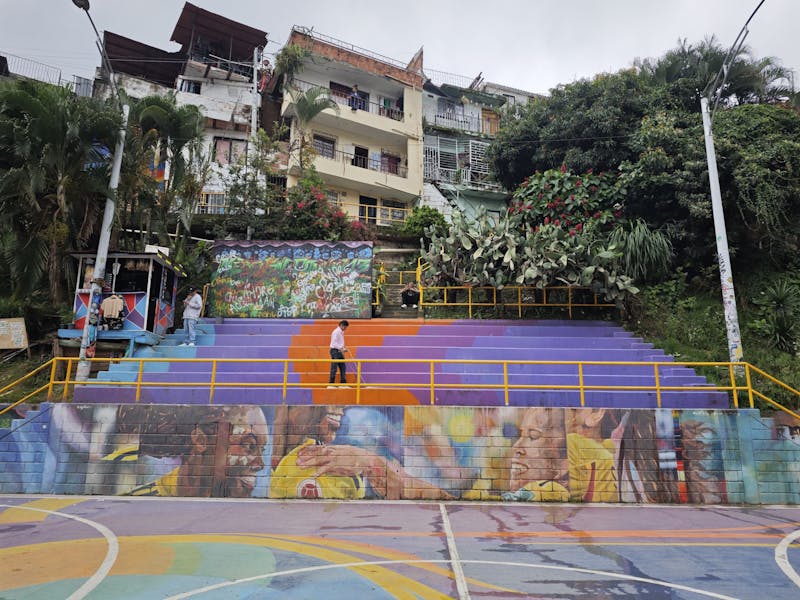
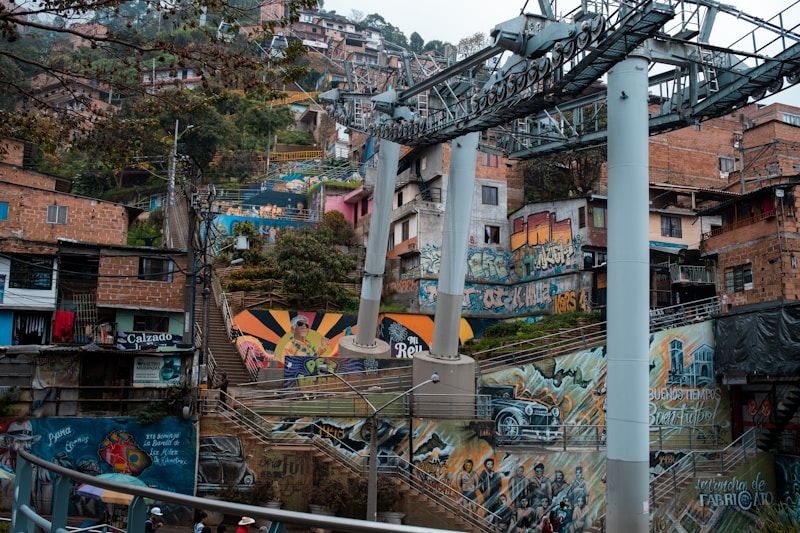
What you’ll see: 50+ large-scale murals covering building facades, stairways, retaining walls. Themes: peace doves, colorful faces, abstract patterns, political statements (some), commercialized art (increasing amount).
What guides explain:
- Which murals were painted by original artists (2013-2015) vs newer commercial pieces (2018+)
- Symbolism: Doves = peace, chains = breaking from violence, faces = victims remembering
- Where bullet holes are still visible under paint layers
- How “Casa Kolacho” collective organized original art movement
What guides don’t mention: Many original murals have been painted over with brighter, more Instagram-friendly designs. The “colorful face” mural everyone photographs was commissioned in 2019 specifically because tour operators noticed tourists wanted vibrant backgrounds for selfies. Effective marketing, but not organic community expression.
The Viewpoints
First escalator plaza: Where 90% of tour photos happen. Overlooks Aburrá Valley, Medellín skyline, mountains. Crowded 10am-3pm.
Basketball court (two flights up): Same view, zero crowds. Local kids play here afternoons. You’ll feel weird photographing children’s basketball game, but the city views are identical to first plaza.
Mirador de las Letras (Comuna 13 sign): Colorful “Comuna 13” letters for photos. Long line weekends, empty weekday mornings.
Casa de la Memoria (Optional Add-On)
Small community museum showing Comuna 13 history through resident testimonies. Some tours include this, most don’t. Worth 20-30 minutes if you want deeper context beyond Instagram murals. Operating hours: Tue-Sat 10am-5pm, closed Sun-Mon. Cost: Free, donations appreciated.
Getting to Comuna 13: Transport Options
Option 1: Metro (Budget Choice)
Route:
- Take metro Line A from El Poblado (Poblado station)
- Transfer at San Antonio to Line B
- Exit at San Javier (final stop)
- Walk 5 minutes uphill to escalator plaza entrance
Cost: $0.80 USD (3,200 COP) one-way. Buy Cívica card ($2 card fee + load balance) if staying in Medellín multiple days.
Time: 25-30 minutes from El Poblado center
Pros: Cheapest option, experience Medellín’s metro system (cleanest in Latin America)
Cons: Must navigate transfer, walk uphill 5 minutes (steep), metro crowded during rush hour (7-9am, 5-7pm)
Safety: Very safe even for solo travelers. Zero reported tourist robberies on Medellín metro 2020-2024. Keep phone/wallet in front pockets during crowded times.
Option 2: Uber/Taxi from El Poblado
Cost: $8-12 USD (32,000-48,000 COP) one-way
Time: 20-25 minutes depending on traffic
Pros: Direct, no navigation required, door-to-door
Cons: More expensive, driver will drop you at base (still 5-min uphill walk), return Uber hard to get (drivers avoid picking up in Comuna 13)
Return tip: Walk down to San Javier metro station and Uber from there, or take metro back to El Poblado.
Option 3: Tour Transport (Included in Paid Tours)
Most $22-28 organized tours include round-trip transport from El Poblado hotels. Private van picks you up, drives to San Javier, guide meets you there. After tour, van returns you to hotel.
Pros: Zero navigation stress, hotel pickup, no return transport hassle
Cons: Fixed schedule (can’t leave early or stay late)
What NOT to Do in Comuna 13
Don’t Visit After Dark
Last tours depart at 4pm to ensure return before sunset (~6pm year-round). After dark, Comuna 13 reverts to a low-income neighborhood with gang presence in areas tourists don’t see during daytime. Never visit after dark, even with locals. Not worth the risk.
Don’t Flash Expensive Cameras/Phones
Plaza Botero has 12 phone thefts per 100,000 visitors. Comuna 13 has 0.5. But the 0.5 happens when tourists wander solo with $1,200 cameras hanging around necks. Keep phone in front pocket when not actively photographing, use wrist strap, don’t leave bags unattended.
Don’t Book Random Guides at Metro Station
5-10 fake guides at San Javier metro approach tourists: “Free tour starts now, vamos!” They provide minimal context, rush through route, then aggressively demand $15-20 tips (vs $5-10 for real free tours).
How to spot fakes: Real free tour guides wear company vests with logos (Real City Tours, Free Walking Tour Medellín). Fake guides wear plain clothes, don’t identify company.
Prevention: Book free tours 1-2 days ahead via company websites. Arrive at exact meeting time/location specified.
Don’t Wander Off the Escalator Route Solo
The escalator route and main plaza are heavily patrolled and safe. Side streets and upper neighborhoods are not tourist infrastructure—you’ll get lost, confused, and potentially enter areas where tourists aren’t welcome.
Stay with your group. If you want to explore more, book a private tour and tell guide: “Quiero ver zonas no turísticas” (I want to see non-touristy areas).
Don’t Skip the Tip on Free Tours (But Don’t Overpay Either)
Guides work for tips only—no salary. $5-10 USD (20,000-40,000 COP) is fair for 2.5-hour tour. Don’t tip $0 (rude), but also don’t let aggressive guides guilt you into $20+ (excessive).
If guide pressures you: “Ya di diez dólares, gracias” (I already gave ten dollars, thanks). Walk away.
Don’t Visit on Tuesdays/Saturdays If You Have Flexibility
Cruise ship days bring 5,000+ visitors. The escalator plaza becomes a human traffic jam. You’ll fight for photos, can’t hear guides, vendors aggressively sell bracelets. If your Medellín schedule allows, go Wednesday-Thursday mornings instead.
Beyond the Escalators: Hidden Spots Most Tours Skip
1. Basketball Court Viewpoint (Flight 5)
Walk two flights past the first escalator plaza where all tours stop. You’ll reach a basketball court where local kids play. Same city views, zero tourists. Best in morning before kids arrive (before 10am) or after school (after 3pm).
Respect: Don’t photograph kids without permission. Focus on cityscape. If kids are playing, wait until a break or skip it.
2. Original Casa Kolacho Murals (Side Street)
Most tours don’t visit the original Casa Kolacho (House of Hip-Hop) building where the art movement started. It’s 2 blocks west of main escalator route, covered in 2013-2014 original murals.
How to find: Ask your guide “Dónde está Casa Kolacho original?” Some guides will take you, others say “not safe” (translation: off script).
Worth it? Only if you’re genuinely interested in Comuna 13’s art history. It’s just a building with older murals—no escalators, no vista.
3. Stairs Between Escalator Flights
Everyone rides escalators. Walk the stairs alongside them—same murals, much quieter, better photo angles (you can stop without blocking escalator traffic).
Trade-off: Steep climb (equivalent to 15 flights). Only if you’re fit and heat-tolerant.
How Long to Spend in Comuna 13
Minimum: 2 hours (rushed free tour, see main escalators and plaza)
Ideal: 3-4 hours (proper tour with transport, time for photos without rushing, visit Casa de la Memoria)
Maximum: Half day (take your time, have lunch in neighborhood, visit quieter spots)
Full day? No. You’ll run out of things to see after 4 hours. Combine with afternoon at Medellín museums or Parque Arví cable car.
Where to Eat in Comuna 13
Most tours don’t include lunch. Here’s what actually works:
Budget: Street Food ($2-5)
Arepas con queso: Corn cakes with cheese, $1-2 (4,000-8,000 COP), vendors along escalator route
Empanadas: Fried pockets with meat/cheese, $1 each (4,000 COP)
Fruit vendors: Fresh mango, papaya, pineapple with lime, $2-3 (8,000-12,000 COP)
Safety: Street food in Comuna 13 is safe—high vendor turnover means fresh preparation. Avoid anything sitting out for hours in heat.
Sit-Down: Local Restaurants ($5-12)
Restaurante Donde Doña Lupe: Basic Colombian food (bandeja paisa, sancocho), $5-8, Calle 42 #104A-55, cash only
El Mirador Café: Coffee and snacks with valley views, $3-5, near first escalator plaza
Reality check: These aren’t gourmet experiences. They’re local restaurants serving residents. Portion sizes are huge, flavors are simple, prices are cheap.
Return to El Poblado for Lunch
Most visitors return to El Poblado after Comuna 13 tour (11am-12pm finish) and eat there. Tons of options, easier logistics.
For complete Medellín restaurant guide, see our food guide.
Combining Comuna 13 with Other Activities
Morning Comuna 13 + Afternoon Options:
Best combination: Comuna 13 8-11am → Lunch in El Poblado → Museo de Antioquia + Plaza Botero 2-4pm (same metro line, easy logistics)
Budget combo: Comuna 13 free tour 9-11:30am → Metro to Parque Berrio → Plaza Botero (free) → Botanical Garden (free) → Total cost: $13 (metro + tour tip + food)
Adventure combo: Comuna 13 8-10:30am → Return to hotel → Paragliding pickup 11:30am (weather permitting)
Don’t combine: Comuna 13 + Guatapé same day (both are half-day minimum, you’ll be exhausted)
Frequently Asked Questions
Is Comuna 13 safe for solo female travelers?
Yes, during daytime organized tours. Zero violent incidents against female tourists on tours 2020-2024. Join a group tour (free or paid), don’t wander solo, avoid after dark. Pickpocketing rate 0.5 per 100,000 visitors (very low). Take metro or Uber to San Javier, stay with tour group, return before sunset. Read our Medellín safety guide for solo female traveler tips.
Can you visit Comuna 13 without a guide?
Technically yes, but you shouldn’t. Take metro Line B to San Javier ($0.80 / 3,200 COP), walk 5 minutes uphill. You’ll see escalators and murals. But you’ll miss the entire transformation story: what specific murals represent, where bullet holes are visible, how 2002 Operation Orion killed 300+ people, why 2011 escalators changed neighborhood economics, which artists were original vs commercial commissions. Going solo means photographing colorful walls without understanding the complex history. Plus solo tourists become pickpocket targets. Join a tour—even free tours provide essential context.
How much should you tip on Comuna 13 free tours?
$5-10 USD (20,000-40,000 COP) is standard for 2.5-hour tours. Guides work for tips only—no salary. $5 minimum is respectful. $10 is generous. $15+ is excessive unless guide provided exceptional service. Some guides get aggressive demanding $15-20—politely decline: “Ya di diez dólares, gracias” (I already gave ten dollars, thanks). Don’t tip $0 (rude), but don’t let guilt tactics pressure you into overpaying either. Budget the tip as actual cost when comparing free vs paid tours ($22-28 with no tipping pressure).
What’s the best day to visit Comuna 13?
Wednesday or Thursday mornings (8-10am start time). Lowest crowds of the week—you’ll share escalator plaza with 20-30 people instead of 200+ on cruise ship days (Tuesdays/Saturdays). Guides have time for questions. Soft morning light perfect for photos. Avoid Tuesdays/Saturdays 10am-3pm when cruise ships dock in Cartagena and tour buses flood Comuna 13 (5,000+ visitors). Weekends also crowded with Colombian families from Bogotá. Weekday mornings before 10am are reliably good across Monday-Friday.
Is Comuna 13 worth visiting in 2026?
Yes, if you understand what you’re getting. Comuna 13’s transformation from war zone (300+ deaths in 2002) to tourist attraction is genuine—murder rates dropped, unemployment decreased, residents earn legal income through tourism. But 13 years after first tours began, the experience is manufactured. You’re seeing “transformation as product” not organic community renewal. Vendors outnumber artists 3:1, new murals commissioned for Instagram appeal, original artists moved away. Still worth visiting for the history (guides who lived through violence share firsthand stories) and understanding urban renewal’s complexity. Just don’t expect “hidden authenticity”—you’re visiting Medellín’s most touristed neighborhood at peak commercialization. Go weekday mornings, pay for quality tour or budget tip money for free tours, listen to guides instead of just taking photos.
How long does Comuna 13 tour take?
2.5-3 hours for free tours (tour only), 3-4 hours for paid tours (including transport from El Poblado). Tour itself covers: 30-40 minutes escalator rides and main plaza, 60-90 minutes walking/viewing murals with guide explanations, 20-30 minutes photo time, 10-20 minutes Casa de la Memoria (optional). Add 30-40 minutes each way for metro travel from El Poblado if doing free tour. Paid tours include round-trip transport so total time is door-to-door. Budget half-day minimum. Don’t try to squeeze Comuna 13 into 1-hour window—you’ll miss the story and feel rushed.
Can you take photos in Comuna 13?
Yes, murals and escalators are fair game. Don’t photograph residents without permission (especially children). Don’t photograph inside homes or private spaces. Keep expensive cameras secured when not actively shooting—use wrist strap, front pockets for phones. Best photo times: 8-10am (soft morning light, fewer crowds) or cloudy days (even light, no harsh shadows). First escalator plaza is most photographed (and most crowded)—walk up to basketball court for same views, zero tourists. The colorful face mural everyone posts is at flight 2. Avoid Tuesdays/Saturdays when you’ll compete with 300+ tourists for the same shots.
What should you wear to Comuna 13?
Comfortable walking shoes (you’ll climb equivalent of 15+ floors), light breathable clothes, sun protection. Avoid: expensive jewelry, designer bags, flashy outfits. You’re visiting a low-income working neighborhood, not a fashion show. Temperature 24-28°C during tours, but feels hotter with humidity and sun exposure. Bring: water bottle, sunscreen SPF 50+, hat, small backpack (not expensive designer bag). Rain jacket April-May and October-November (afternoon showers common). Wear cross-body bag, not backpack (harder to pickpocket). Keep valuables in front pockets. Don’t dress like you’re going to nightclub—think practical tourist, not Instagram influencer.
Should You Visit Comuna 13?
Visit if:
- You want to understand Medellín’s transformation beyond marketing
- You’re willing to engage with complex history (not just photo ops)
- You can go weekday mornings (better experience)
- You’ll pay for quality tour or budget tip money for free tours
Skip if:
- You only have 1-2 days in Medellín (prioritize Guatapé day trip or paragliding instead)
- You hate crowds and can only visit weekends
- You just want Instagram photos (hire photographer for better shots elsewhere)
- You’re seeking “undiscovered authenticity” (that ship sailed 2017)
The honest take: Comuna 13 is Medellín’s most important neighborhood for understanding the city’s transformation. But it’s also Medellín’s most touristed neighborhood, diluted by commercialization. Both statements are true. The value comes from engaging with that complexity—not romanticizing “resilience” while ignoring tourism’s extractive effects.
Go weekday mornings. Pay attention to guides instead of just photographing. Recognize that your tourism dollars help residents while simultaneously commodifying their trauma. Accept you’re witnessing transformation as product, and extract value anyway—the history still matters even if the presentation is polished for tourism.
Ready to explore Medellín? See our complete things to do guide for how Comuna 13 fits into a 3-5 day itinerary, or check where to stay for neighborhoods with easiest access to tours.